.png)
Myofunctional Therapy for Children: What Every Parent Should Know


If you've recently heard the term myofunctional therapy from your child's dentist, orthodontist, or speech-language pathologist, you're probably wondering what it means—and whether your child could benefit from it.
The muscles of the mouth, tongue, and face do much more than help us eat and speak. They also play an important role in breathing, facial development, sleep quality, and proper dental alignment. When these muscles aren't working the way they should, children may develop habits or movement patterns that affect their overall growth and development.
Myofunctional therapy is a specialized treatment that helps retrain these muscles, improving how they work together during breathing, speaking, chewing, and swallowing. The earlier these concerns are identified, the easier they are often to address, helping children build healthy habits that can last a lifetime.
What Is Orofacial Myofunctional Therapy?
Orofacial Myofunctional Therapy (OMT) is a personalized therapy program designed to improve the strength, coordination, and function of the muscles of the face, mouth, tongue, and throat.
A specially trained speech-language pathologist guides children through exercises and activities that teach proper tongue placement, nasal breathing, lip closure, and swallowing patterns. These skills may seem simple, but they have a significant impact on oral health and everyday function.
OMT is used to treat orofacial myofunctional disorders (OMDs)—conditions where incorrect muscle patterns interfere with healthy development. These disorders can contribute to speech difficulties, orthodontic concerns, mouth breathing, sleep-disordered breathing, and feeding challenges.
If your child is already receiving speech therapy, myofunctional therapy may be recommended as part of a comprehensive treatment plan when oral muscle function is affecting speech production or oral motor skills.
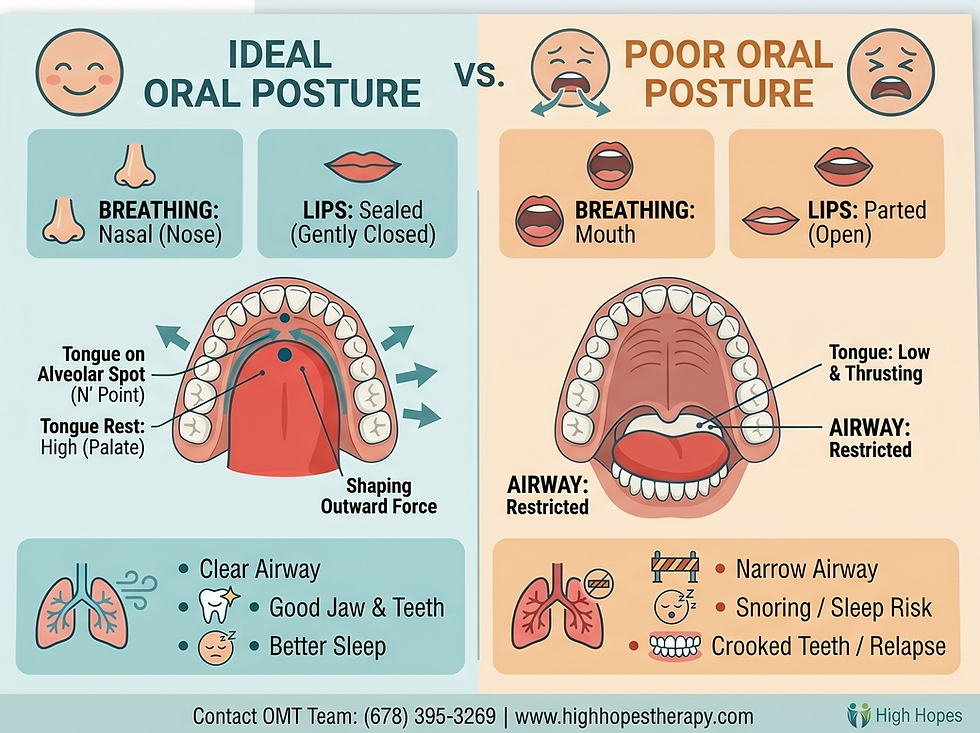
Signs Your Child May Benefit from Myofunctional Therapy
Not every child needs myofunctional therapy, but certain signs may indicate it's time for an evaluation.
Tongue Thrust
A child with tongue thrust pushes their tongue against or between the teeth while swallowing, speaking, or even resting. Over time, this can contribute to an open bite, speech concerns, and orthodontic relapse.
Mouth Breathing
Consistently breathing through the mouth instead of the nose—especially during sleep—can affect facial growth, sleep quality, attention, and overall health.
Open-Mouth Resting Posture
If your child's mouth stays open most of the time when they're relaxed, it may be a sign that the lips, tongue, and facial muscles aren't functioning efficiently.
Prolonged Thumb Sucking or Pacifier Use
Thumb sucking or pacifier use beyond age four may influence jaw development and tongue positioning, making it harder for proper oral habits to develop naturally.
Tongue Tie (Ankyloglossia)
Even after a tongue-tie release (frenectomy), children often need therapy to retrain the tongue muscles and establish healthy movement patterns. Without therapy, old habits may continue.
Teeth Shifting After Braces
If teeth begin moving after orthodontic treatment, the underlying cause may not be the teeth themselves. Persistent tongue thrust or poor tongue posture can place continuous pressure on the teeth, causing them to shift over time.

How Myofunctional Therapy Works
Every child is different, so treatment is customized based on their individual needs. During therapy, children learn new muscle patterns through engaging exercises and consistent practice.
A typical myofunctional therapy program includes:
Comprehensive Evaluation
Your therapist evaluates your child's tongue position, swallowing pattern, breathing habits, lip closure, jaw function, and resting posture to create an individualized treatment plan.
Nasal Breathing Training
Children learn techniques that encourage healthy nasal breathing, which supports proper oxygen intake, facial development, and better sleep.
Lip Closure Exercises
Simple exercises strengthen the lips so the mouth naturally stays closed when resting.
Tongue Resting Position
Children practice placing the tongue in its ideal resting position against the roof of the mouth, helping support healthy jaw and dental development.
Swallow Retraining
Therapists teach children how to replace tongue thrust with a mature swallowing pattern that reduces unnecessary pressure on the teeth.
Chewing Skills
If chewing is inefficient or uncoordinated, therapy helps improve muscle coordination and oral motor function. Children who struggle with chewing or swallowing may also benefit from feeding therapy to address underlying oral motor or sensory challenges.
Building Lasting Habits
The ultimate goal is to make these healthy movement patterns automatic during everyday activities—not just during therapy sessions.
Most myofunctional therapy programs last four to nine months, with weekly or bi-weekly appointments combined with short home exercises that reinforce progress.
Why Early Intervention Matters
Many parents assume children will outgrow mouth breathing or tongue thrust, but these habits often persist without intervention.
When left untreated, orofacial myofunctional disorders may contribute to:
Speech sound difficulties
Orthodontic problems
Improper jaw growth
Sleep-disordered breathing
Difficulty chewing or swallowing
Ongoing oral habits that affect long-term development
Early evaluation allows families to address these concerns before they become more difficult—or more expensive—to correct.
If you have concerns about your child's speech, feeding, or oral motor development, seeking an early pediatric therapy evaluation can provide answers and peace of mind.

A Team Approach to Care
One of the strengths of myofunctional therapy is that it often works alongside other healthcare professionals.
At High Hopes Therapy, our speech-language pathologists collaborate with pediatric dentists, orthodontists, ENTs, pediatricians, and other specialists to ensure every child receives coordinated care. This team approach helps address not only the symptoms but also the underlying causes of oral muscle dysfunction.
Depending on your child's needs, therapy may also be coordinated with speech therapy or feeding therapy to support communication, oral motor development, and safe eating skills.
Myofunctional Therapy at High Hopes Therapy
At High Hopes Therapy, our specially trained speech-language pathologists provide individualized myofunctional therapy plans that are tailored to each child's unique needs and goals.
We believe therapy should fit naturally into everyday life, so we partner closely with families to create manageable home practice routines that encourage lasting success. Our goal is to help children build healthy oral habits that improve speech, breathing, eating, and overall development.
As part of our comprehensive pediatric therapy services, we work collaboratively with your child's healthcare providers to ensure they receive well-rounded, coordinated care.
Frequently Asked Questions
What age can myofunctional therapy begin?
Many children begin formal myofunctional therapy around 7 or 8 years old, when they're able to follow directions consistently. However, younger children with oral motor concerns, feeding challenges, or tongue ties may benefit from earlier intervention and therapy recommendations.
How long does myofunctional therapy take?
Most treatment plans last between four and nine months, depending on the child's age, goals, and consistency with home practice.
Does insurance cover myofunctional therapy?
Coverage varies by insurance provider. Some plans include myofunctional therapy under speech therapy benefits, while others may not. Our team is happy to help answer questions about insurance and available therapy options.
How does myofunctional therapy help orthodontic treatment?
Proper tongue posture and swallowing patterns help support long-term orthodontic results. Many orthodontists recommend myofunctional therapy before, during, or after braces to reduce the risk of teeth shifting back over time.

Help Your Child Build Healthy Oral Habits for Life
The way your child breathes, swallows, chews, and rests their tongue can have a lasting impact on their speech, dental development, sleep, and overall well-being. If you've noticed signs like mouth breathing, tongue thrust, persistent oral habits, or concerns after orthodontic treatment, a myofunctional evaluation can provide valuable answers.
At High Hopes Therapy, our experienced therapists take a personalized, family-centered approach to care. We'll work with you to understand your child's needs, develop achievable goals, and create a treatment plan that supports long-term success.
Ready to Take the Next Step?
If you think your child may benefit from myofunctional therapy, don't wait to get the answers you need. Early intervention can make a meaningful difference in your child's speech, breathing, eating, dental development, and confidence.
We proudly serve families throughout North Atlanta, including:
And surrounding communities.
Contact High Hopes Therapy today to schedule a comprehensive evaluation. We'll partner with your family to create a personalized treatment plan that helps your child develop healthy habits and thrive both now and in the future.


Comments